Heroes of Might and Magic Olden Era did not quietly slip onto Steam. The demo launched in October 2025 during Steam Next Fest and quickly became one of the most downloaded strategy demos on the platform. For a franchise that peaked more than two decades ago, that kind of traction says something. Veterans who spent their teenage years grinding extra large maps in Heroes III suddenly had a modern build to test. Within days, forum threads were breaking down creature growth numbers and spell efficiency like it was 2001 again.
This is not hype built on cinematic trailers. It is built on mechanics. Players opened the demo and immediately checked movement values, weekly unit growth, hero skill trees, and town build paths. That is where the real conversation started.
Playable Factions in The Demo
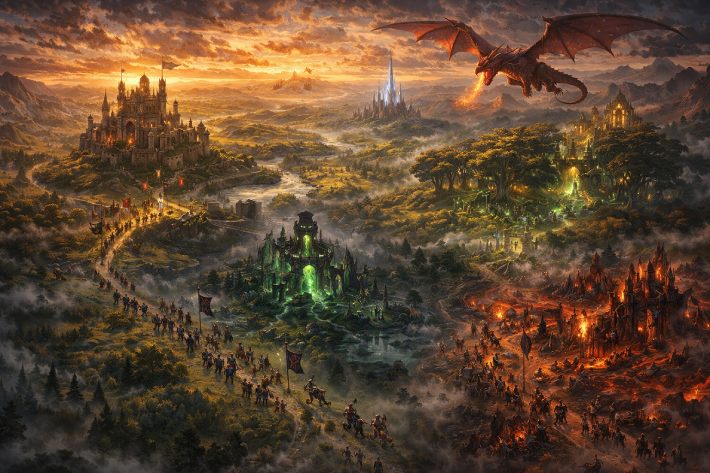
The demo featured four fully playable factions. Each came with distinct unit lineups, town structures, and hero classes.
- Temple – A classic order aligned faction built around disciplined infantry and cavalry. Early units include Squires and Crossbowmen, with Griffins and heavy cavalry appearing in higher tiers. Temple focuses on stable economy growth and reliable battlefield control. Its heroes lean toward balanced stat progression and defensive buffs.
- Necropolis – The undead return with Skeletons forming the core of early armies. Vampires and Liches appear mid tier, with necromancy redesigned to prevent runaway stacking. Instead of unlimited skeleton farming, resurrection output is capped and tied to hero progression. This change alone sparked dozens of balance discussions among experienced players.
- Dungeon – A subterranean faction centered on aggressive spell synergy and mobility. Units emphasize burst damage and debuffs rather than raw durability. Dungeon heroes tend to favor spell power growth, encouraging offensive magic builds early in the match.
- Schism – A new addition to the series. Schism introduces arcane twisted creatures with unconventional spell mechanics. Early impressions from testers suggest it plays more unpredictably than classic factions, relying on ability interactions rather than straightforward stat advantages.
The demo included several handcrafted maps and a medium sized random map template. Large and extra large maps were not available. Multiplayer and map editor tools were also absent from the demo build.
Confirmed Factions For Full Early Access
At full Early Access launch, the roster expands to six factions. The four from the demo will be joined by two additional towns.
- Sylvan – A forest based faction built around Druids, Treants, and fast ranged units. Early previews suggest a strong emphasis on battlefield positioning and nature magic synergy.
- Hive – An insect inspired faction focused on swarming tactics and unique resource mechanics. Hive is expected to introduce alternative growth structures and army scaling systems that differ from the traditional gold centric economy.
Each faction at launch is planned to feature seven creature tiers with upgrade paths more aligned with Heroes III than later series entries. Town screens are fully animated and faction specific building trees have been confirmed. Developers have stated that additional factions may be added post launch depending on community feedback and performance.
Release Window and Roadmap
The current target for Early Access is sometime in 2026. The demo’s popularity and community feedback led to a delay from the original internal schedule. Developers have stated openly that additional development time was needed to refine balance systems, AI behavior, and interface clarity.
Early Access is expected to include:
- Six playable factions
- Online multiplayer including ranked modes
- Hotseat local multiplayer
- Larger map sizes with underground layers
- A functional map editor
- Campaign missions covering multiple factions
Campaign length is projected at roughly 25 to 30 hours at launch, separate from skirmish and multiplayer content.
Developer Communication and Balance Adjustments
One reason hardcore players are taking Olden Era seriously is the level of transparency from the studio. Patch updates to the demo have addressed unit growth rates, necromancy scaling, and AI aggression within weeks of community complaints. Balance discussions happen publicly on Discord and Steam forums, and changes are reflected quickly in test builds.
When players pointed out Necropolis snowballing too quickly on resource heavy maps, growth values were adjusted. When AI pathfinding failed on certain terrain layouts, hotfixes followed. These are the details strategy veterans look for.
There is still skepticism. Fans remember previous entries that promised a return to form and missed the mark. But Olden Era is showing its numbers early. Creature stats, spell costs, skill trees. They are visible and subject to feedback before Early Access locks them in.
For a series built on careful planning and long matches, that openness may matter as much as any faction reveal. The real test will come once all six towns clash on extra large maps with multiplayer enabled. That is when the hardcore audience will decide if this is truly the successor they have been waiting for.